
Check the camp's official kit list first, then label every item before it goes in the bag. Beyond that, five things matter more than anything else: a refillable water bottle, non-aerosol sunscreen, one spare outfit sealed in its own bag, closed-toe shoes, and a labelled day bag for wet kit. Everything else is detail, which is exactly what the rest of this guide covers.
TL;DR:
- Fewer, well-labelled items are more effective than overpacking, which increases the risk of losing belongings and hampers camper independence.
- Confirm what is supplied by the camp and what clothing or gear is needed based on the specific activities and climate to avoid duplication and last-minute purchases.
- Pack essentials such as a refillable water bottle, non-aerosol sunscreen, a sealed extra outfit, closed-toe shoes, and a labelled day bag for wet gear, focusing on practicality.
- Use packing systems like labeled outfits in resealable bags and do a final checklist 48 hours before departure to prevent forgotten items and reduce stress.
- Joining a managed camp service can streamline the process by providing tailored packing guidance, confirming item limits, and offering pre-arrival briefs to reduce uncertainty.
Table of Contents
- Suitcase or backpack: choosing the right bag for camp
- Packing tips that stop lost property before it starts
- Clothing and footwear: exact counts and what to buy
- Toiletries, sun protection and basic first aid
- Bedding and sleep items for overnight stays
- Day camp vs sleepaway: two checklists side by side
- Labelling and organisation systems that actually work
- What to confirm with your programme provider before you pack
- Why most packing lists get the priorities backwards
- Let a managed camp placement take the guesswork out of packing
- Sources
- FAQ
Suitcase or backpack: choosing the right bag for camp
The bag you choose depends on how the camper moves once they arrive, not just how they travel there. A wheeled duffel or trunk suits sleepaway camps where kit sits under a bunk for two or three weeks. A backpack, ideally one that opens from the side rather than the top, works better for day camps and any activity that involves walking between sites, since it stays organised without a full tip-out search for socks.
Many sleepaway camps set a maximum trunk size, so check that figure against the case before buying anything new.
On travel day itself, keep a few things out of the main luggage entirely:
- Passport or ID, and any medical or consent forms the camp needs on arrival
- A full change of clothes, in case luggage is delayed or a spill happens en route
- One comfort item, such as a small soft toy or a family photo, kept easily accessible rather than buried at the bottom of a trunk
Packing tips that stop lost property before it starts
Camp directors consistently point to the same problem: too much stuff. Overpacking increases the chance items go missing and stops children learning to look after their own belongings, according to advice from camp professionals interviewed by Everyday Health. Pack less, label more, and the whole two weeks runs smoother.
A few habits make the biggest difference:
- Use travel-size toiletries and a small hanging wash caddy rather than full-size bottles that take up locker space.
- Roll clothes instead of folding them, and pack complete outfits into individually labelled day bags.
- Break shoes in before departure, and pack one or two spare pairs of socks and underwear beyond the daily count.
- Keep a dedicated mesh bag for wet swimwear and towels, so damp kit doesn't turn the whole trunk musty.
- Ring the camp office and ask exactly what they supply and what's banned, before buying anything.
Pro Tip: Pack one sealed bag labelled "CHANGE" with a full spare outfit inside. If your camper falls in a lake, gets muddy on a hike, or simply has a rough day, that bag saves everyone a scramble.
Clothing and footwear: exact counts and what to buy
For sleepaway camp, Wirecutter's testing-based packing guidance favours quick-dry fabrics over cotton for anything worn during activities, since damp cotton stays damp and starts to smell. A simple rule of thumb is to pack enough socks and underwear for the camp days plus some extra, so a two-week stay generally requires a quantity exceeding daily use to accommodate messes and laundry gaps.
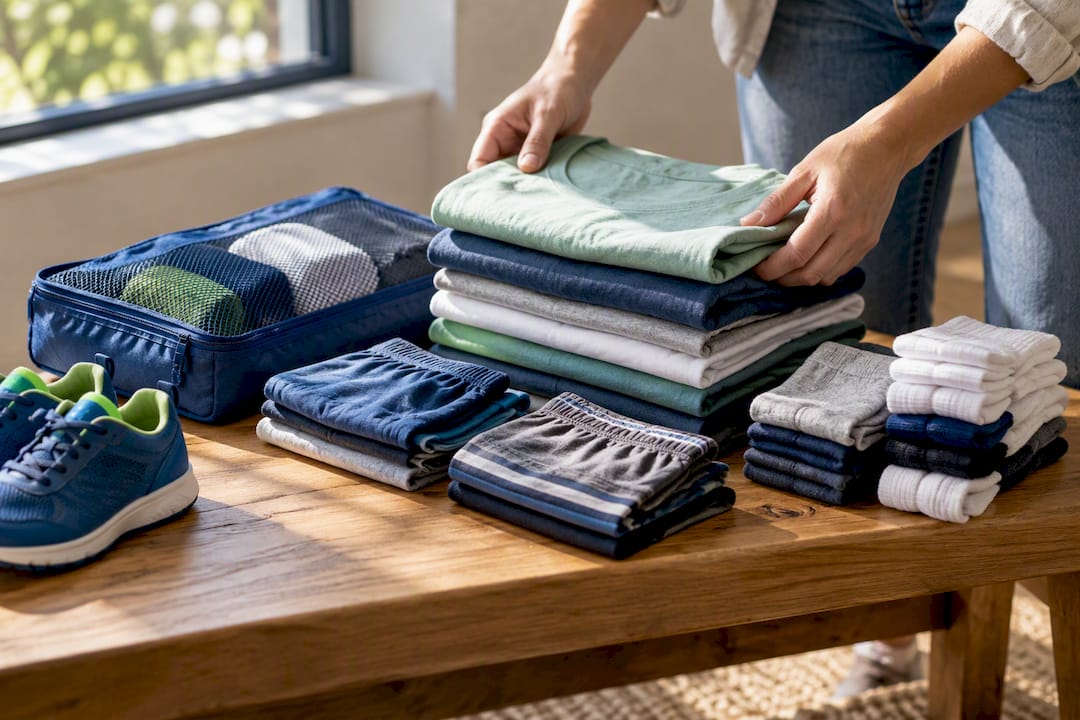
For day camp, essentials plus a single spare set usually covers it, since laundry happens at home each evening.
What to actually pack:
- T-shirts and shorts: one per day is standard for sleepaway; day campers need fewer since they go home nightly.
- Base layers: a merino or technical blend traps less odour than cotton on multi-day wear.
- One warm layer: a fleece or jumper for cool evenings, even in summer.
- One waterproof shell: lightweight and packable, non-negotiable for outdoor camps in changeable climates.
- Closed-toe trainers or hiking shoes: required for most activities, and should be broken in at home first, never worn for the first time at camp.
- Shower sandals: essential for communal bathroom blocks, covered in more detail below.
Toiletries, sun protection and basic first aid
Sun and insect protection sit near the top of most camp lists, and for good reason. Non-aerosol sunscreen rated SPF30 or higher is the standard most camps request, since aerosol cans are often banned outright for safety and environmental reasons. Insect repellent should match whatever policy the specific camp sets, as some restrict certain active ingredients for younger children.
Any prescription medication needs its original labelled packaging plus written instructions for camp staff, handed over at check-in rather than left in a camper's own bag.
A basic shower kit should include:
- Shampoo and a small bar or bottle of soap
- A toothbrush, toothpaste, and a travel case to keep both dry
- Deodorant, appropriate for the camper's age
- Shower sandals, worn every single time in communal shower blocks
That last point matters more than it sounds. Shower foot hygiene guidance from University of Utah Health recommends sandals and good drying habits specifically to reduce fungal infection risk in shared bathroom facilities, which is one of the most common minor health complaints camps deal with each summer.
Bedding and sleep items for overnight stays
Most sleepaway camps specify whether campers need a sleeping bag or a fitted sheet and blanket for a standard camp bed, so this is worth confirming rather than guessing. A three-season sleeping bag covers most summer camp climates without overheating a child on a warm night.
Pack these alongside the main bedding:
- A pillowcase, even if the camp provides the pillow itself
- One small blanket for rest periods or cooler evenings
- A single, replaceable comfort item rather than an irreplaceable family heirloom, which limits the fallout if it goes missing
- A waterproof stuff sack or bag liner if the camp is in a region prone to damp weather, since a wet sleeping bag ruins several nights in a row
Day camp vs sleepaway: two checklists side by side
The gap between the two is bigger than most first-time parents expect. Day camp packing is about surviving one-day outdoors; sleepaway packing is about running a small independent household for two or three weeks.
| Category | Day camp essentials | Sleepaway camp essentials |
|---|---|---|
| Hydration and food | Refillable water bottle, packed lunch unless camp provides one | Refillable water bottle, snacks only if camp permits them |
| Sun protection | Sunscreen applied before drop-off, sun hat | Sunscreen (non-aerosol), hat, aftersun if not supplied |
| Footwear | Closed-toe shoes | Closed-toe shoes, shower sandals, one spare pair |
| Documents | Emergency contact card | Passport/ID copy, medical forms, camp contact list |
| Bedding | None needed | Sleeping bag or sheets, pillowcase, small blanket |
Many camps supply towels, linen, and even basic toiletries as part of the programme fee, so check the joining pack before duplicating anything on this table.
Labelling and organisation systems that actually work
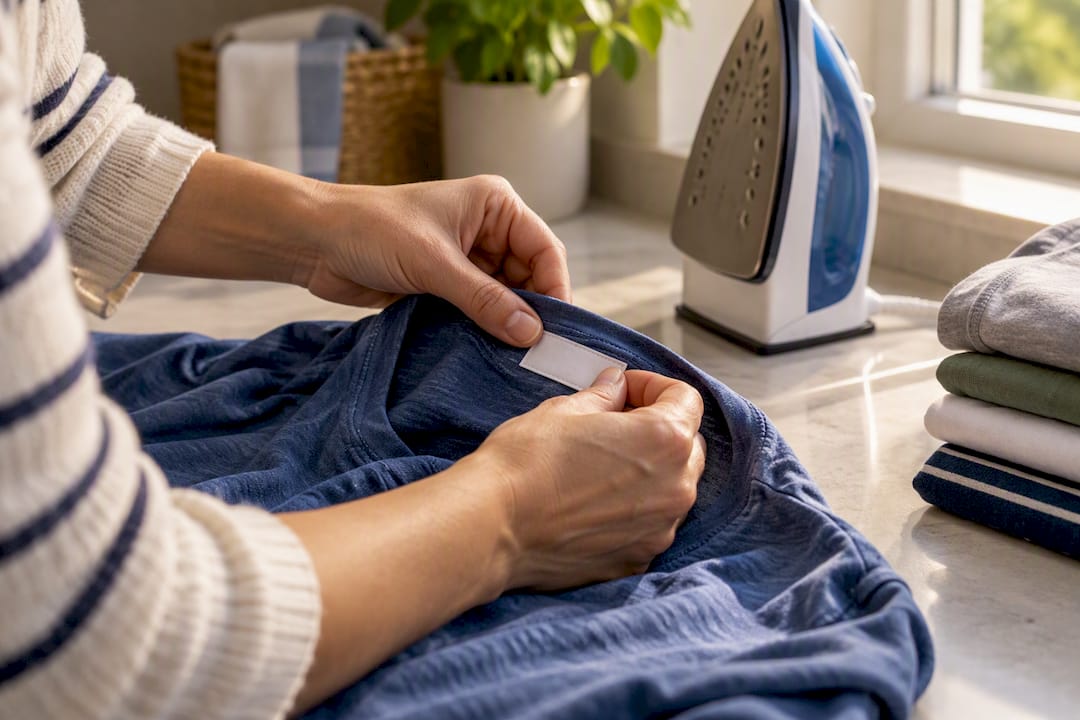
Label everything roughly two weeks before departure, giving enough time to iron on or sew in name tags without a last-minute panic. ACACamps' official packing guidance recommends labelling every single item, since name-taped clothing is the single biggest factor in lost-property recovery rates at most camps.
For plastic items such as water bottles or torches, write the name in permanent marker on masking tape, then seal it with clear packing tape so it survives repeated handling.
Two systems worth copying:
- Pack outfits into "Day 1," "Day 2" resealable bags, so mornings involve grabbing a bag rather than hunting through a trunk.
- Do a final checklist run 48 hours before departure, checking off each labelled item against the camp's own list.
Pro Tip: Sew or iron on labels rather than relying on a marker pen for clothing. Ink fades in a hot camp laundry within a week; stitched labels survive the whole season.
What to confirm with your programme provider before you pack
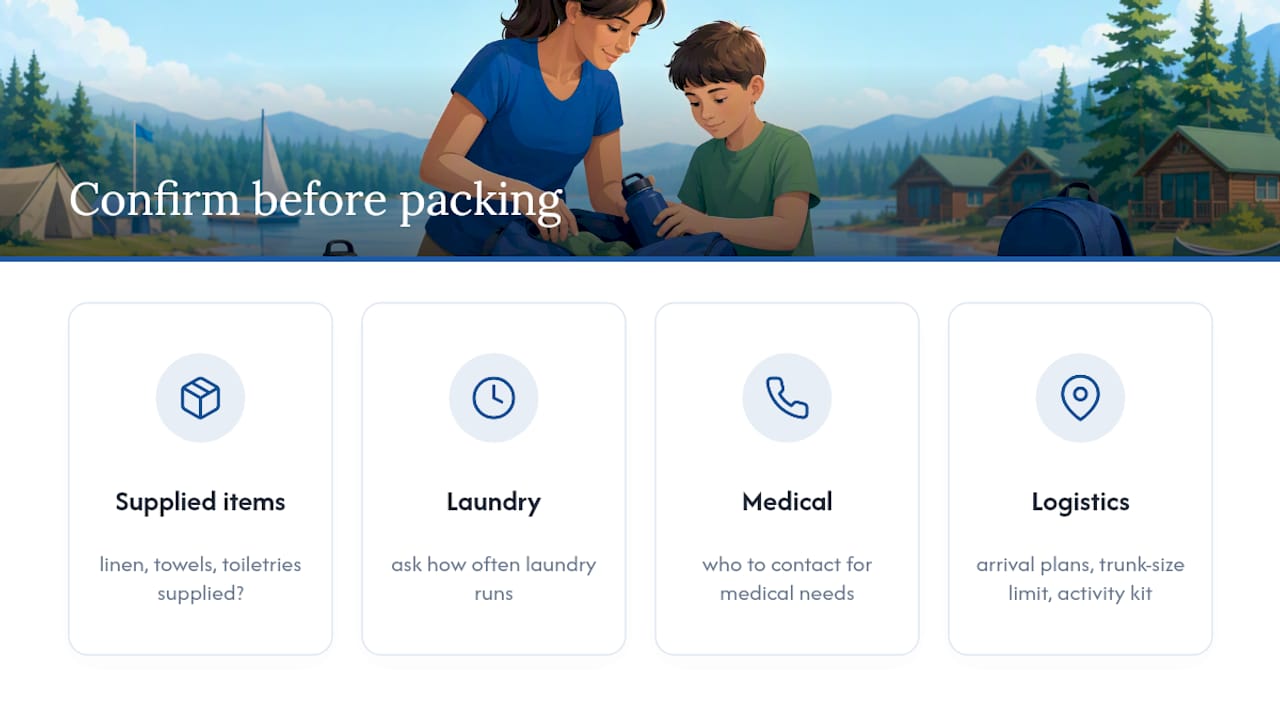
A quick call before you pack saves buying things twice. Ask what's supplied (linen, towels, toiletries), how often laundry happens, and who to contact for medical needs. Confirm arrival logistics, any trunk-size limit, and kit needed for specific activities like watersports or hiking.
Why most packing lists get the priorities backwards
Most packing advice online treats every item as equally important, which is precisely why parents end up with a trunk full of things nobody uses. The research is consistent on one point: fewer, better-chosen items beat a comprehensive-looking pile every time. A camper who owns four labelled t-shirts they can find is better off than one who owns nine unlabelled ones scattered across a cabin floor.
The conventional wisdom oversells "just in case" packing. Extra layers for hypothetical cold snaps, a second pair of trainers "to be safe," a full first-aid kit when the camp nurse already carries one, these all add weight and risk without adding much real security. What actually protects a child at camp is a short list executed properly: labelled kit, a confirmed medical plan with staff, and a clear sense of what the camp itself provides so nothing gets bought twice.
Where organised programmes earn their keep is exactly here. A provider that sends a proper joining pack, confirms trunk sizes, and tells you what's supplied removes half the guesswork before a single bag gets packed. That's not a minor convenience. It's the difference between a stressful Sunday night of last-minute purchases and a calm, confirmed list two weeks out.
— Eugeni
Let a managed camp placement take the guesswork out of packing
Families can choose a managed camp placement service that offers programme matching, vetted accommodation, visa handling where relevant, and local 24/7 support built into one booking.

That support extends directly to packing. Families booking a summer camp in Ireland receive pre-arrival briefings that spell out exactly what the camp supplies, what trunk size fits, and what local weather calls for, so there's no duplicate buying and no last-minute scramble. The same applies to the Summer Camp Cork programme and other regional placements, each with its own joining pack tailored to that location's climate and activities.
If your family is weighing up a multi-week camp for a child aged 10 to 18, check current dates and pricing on the summer camps page and get a programme match started before the popular weeks fill up.
Sources
- What Kids Actually Need for Summer Camp — Here’s How to Pack Smart (Without Overpacking)
- What to Bring to Camp
- What to Pack for Summer Camp | Reviews by Wirecutter
- Shower foot hygiene guidance
FAQ
What is the rule of three at summer camp?
There's no single official "rule of three." Most parents use it informally to mean packing roughly three of each essential wearable item, such as swimwear or towels, so one is always drying while another is in use. Always check your specific camp's list, since some set their own exact counts.
What are the ten most important things to pack for camping?
Priority items are a water bottle, sunscreen, insect repellent, closed-toe shoes, a spare labelled outfit, a waterproof layer, shower sandals, basic toiletries, a torch, and any required medication with written instructions. Sleepaway campers also need bedding, covered in detail above.
What is the most commonly forgotten item when camping?
Spare socks and underwear top most camp directors' lists of items families forget, followed closely by a torch for cabin use after lights-out. Labelled shower sandals are the next most common gap, and their absence is directly linked to the foot hygiene issues communal showers can cause.
What should go in a summer camp care package?
A good care package sticks to small, non-perishable items the camp allows, such as stickers, a short letter, a puzzle book, or a replaceable comfort object. Skip food unless the camp explicitly permits it, since many sites ban outside snacks to manage allergies across the whole group.
Does Go Study Ireland provide a packing list for its summer camps?
Yes. Families booking through Gostudyireland receive a pre-arrival briefing covering what the programme supplies, trunk size limits, and location-specific weather advice, so packing decisions are made with the actual camp details in hand rather than guesswork.